How 4 Marketing Pros Designed Their Digital Portfolios


For content marketing consultants and freelance designers, a digital portfolio is more than just a collection of work—it’s a vital tool for attracting clients and showcasing expertise. At a recent EM Lunch & Learn, four professionals in the EM Community shared their portfolios and how they approached the design.
The Journalist-Turned-Content Marketer: Julissa Treviño
Julissa is a first-gen Mexican-American content and product marketer with a focus on storytelling and strategy with experience at companies like Adobe and Dropbox. She recently redesigned her portfolio from a simple resume-style format to a holistic representation of her services and personality by:
- Emphasizing storytelling across her work in journalism, brand stories, and marketing
- Incorporating testimonials for social proof
- Adding more interesting visual elements like colors and shapes

Squarespace provided an easy starting point. Julissa modified templates to create an attractive website that reflected her personal brand. She also got feedback from friends and other professionals to check that her messaging was clear.
The Freelance Writer: Katie Gustafson
Katie is a freelance writer specializing in content marketing, thought leadership, ghostwriting, copywriting, and grant writing. Her portfolio strategy includes:
- Maintaining a website for an overview of her services, alongside Contently which provides a comprehensive display of pieces to show volume and variety
- Using filtering capabilities to organize content
- Regularly reviewing links to ensure they are still active
- Strategically reordering content based on specific job applications
Katie uses Contently’s free portfolio platform and finds its quick-import features efficient. For ghostwritten content, Gustafson stresses the importance of getting permission before including it in a portfolio.
The Visual Storyteller: Bradley Marks
Bradley is a graphic, motion, and multimedia designer with a background in graphic design, advertising, brand development, and network television. He crafted his portfolio using Elementor on WordPress, creating a visually engaging experience that immediately communicates his versatility. His approach features:
- An animated octopus as a visual hook representing his diverse skill set
- Prominent placement of sizzle reels
- Strategic presentation of information to encourage exploration
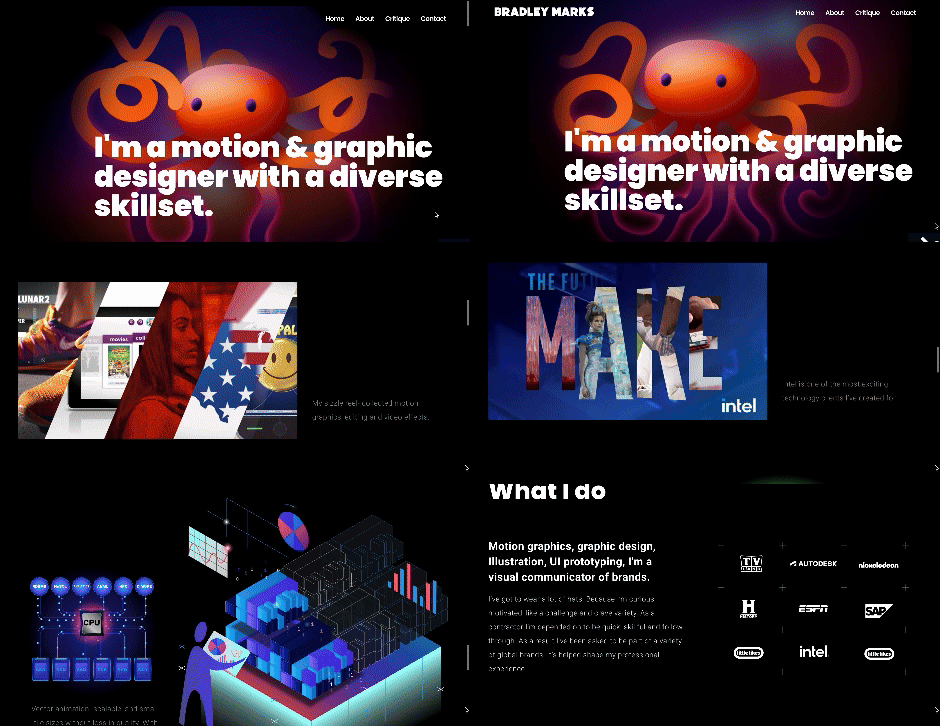
Bradley highlights the importance of showing enough current work to get a sense of your overall style. Based on the portfolio, a hiring manager will hopefully seek a conversation to get to know you better as a person and a designer.
The Web Developer-Designer: Lindsey Obermeier
Lindsey is a formally trained graphic designer and a self-taught web developer who has helped entrepreneurs, artists, musicians, and small businesses find their visual voice. She takes a minimalist approach to her self-hosted WordPress portfolio. Her strategy emphasizes:
- Clean, simple organization divided between design and coding work
- Personal touches through childhood photos to humanize her brand
- Recommendation of Breakdance, a user-friendly WordPress site builder
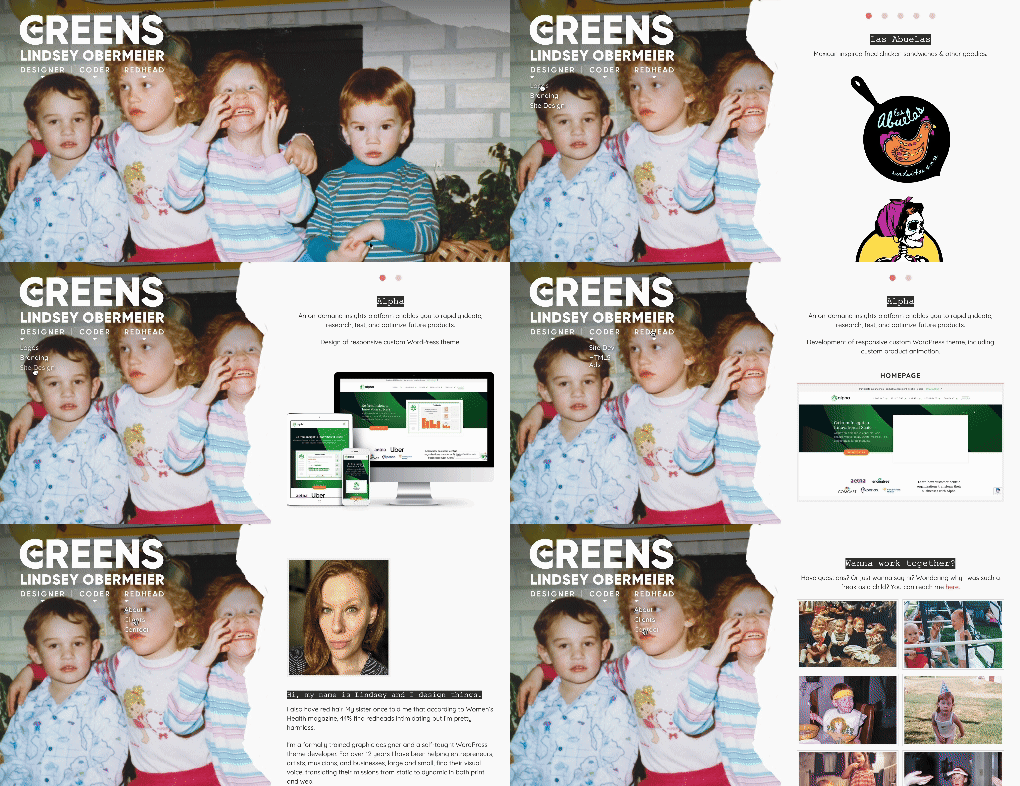
Lindsey noted that a portfolio should selectively showcase your best work and pieces that are representative of the kind of work you enjoy.
The Hiring Perspective: How Portfolios Are Evaluated
We asked an EM Marketing recruiter and The Break’s Creative Director what they look for so content marketers and designers can optimize how they present their portfolios.
The Creative Director’s View
- Conceptual Pop: A hook, strong visual, or conceptual element that conveys personality quickly can make a portfolio stand out
- Show, Don’t Tell: Prioritize showing actual work samples over lengthy descriptions
- Keep It Fresh: Regular updates are crucial, even though finding time can be challenging
- Strategic Simplicity: Avoid overwhelming viewers with too much content
The Talent Recruiter’s View
- Lead with Impact: Create a strong first impression through clear value propositions that capture attention immediately
- Easy Navigation: Clear headings and intuitive organization are crucial
- Zero Tolerance for Errors: Recruiters often reject portfolios with even minor mistakes
- Targeted Content: Present work that directly relates to the role being sought
The best portfolios strike a balance between professional presentation and personal expression while remaining mindful of your target audience. No matter the platform, your portfolio’s success depends on how quickly and effectively it communicates your value to potential clients.

Related
-

-
| Monica Ortiz
Give Fall Event Planning the Grace of Time
-
| Leilani Yau
Content with Consulting: Meet Moira Alexander
-
| Leilani Yau
Business Development for Consultants
-
-
-
| Katherine Gustafson
What It Really Takes to Make It as a Freelancer
-
-
-
| Katherine Gustafson
5 Tips for Successfully Onboarding a Consultant
-
| Leilani Yau
New Year, New Manager? Tips to Handle What’s Next
-
| Katherine Gustafson
Ty Wang Talks Sustainability and Trying New Things
-
| Ken Chen
When In-Between: Practical Ways to Re-Engage
-
| Katherine Gustafson
Third Thursday Talks | Molly St. Louis, “3 Types of Content: Earned, Owned, and Branded”
-
| Katherine Gustafson
What does inflation mean for consulting wages?
-
| Mackenzie Hamilton
Third Thursday Talks | Kristen Matthews on Influencer Marketing
-
| Mackenzie Hamilton
Third Thursday Talks | Adam Duran, “Humble, Hungry, and Smart”
-
| Katherine Gustafson
How A Little Tough Love Helped Me Achieve Freelance Success
-
-
| Tricia McKinney
9 Project Management Best Practices for Creating Video Content
-
-
| Barrett Rudich
How to Bring More Value to Your Next Video Project
-
| Lynn Bruno
3 Skills Every Consultant Should Master
-
| Jessica Smith
3 Ways Practicing Gratitude Can Boost Your Consulting Success
-
| Jessica Smith
How to Sustain Your Energy to Avoid or Recover from Burnout
-
| Annabelle Bayhan
8 Tips for Finding Work in a Tough Economy
-
-
| Pam Farone
6 Tips for Always Having Consulting Work
-
| Katherine Gustafson
Want Job Security? Here’s Why You Should Consider Freelancing
-
| Lynn Bruno
The Curator’s Guide to Shareable B2B Content
-
| Katherine Gustafson
Six Figures vs. Barely Getting By: A Tale of Two Consultants
-
| Lisa Rodriguez
9 Ways to Move the Needle with Social Media
-
| Annabelle Bayhan
Not Business as Usual: Messaging in the New World
-
| Jane Markell
When to Hire a Consultant
-
| Lynn Bruno
5 Best Practices for Managing Client Expectations
-
| Alexis Keenan
10 Pro Tips for Making Better Quality Video at Home
-
-
| Molly Tapias
Six Ways to Win at Content Marketing in 2020
-
| Kristen Matthews
8 More Ways to Promote Your B2B Blog
-
-
| Lynn Bruno
Consultant Confidential: Saying No and I Don’t Know
-
| Lynn Bruno
Consultant Confidential: How to Market Yourself
-
-
| Suzy DeLine
Twitter: What Is It and Should You Do It?
-
| Suzy DeLine
F* It, We’ll Do It Live!
-
| Suzy DeLine
Content Marketing: 2019 Edition
-
-
-
| Suzy DeLine
Social Media Marketing: Do This, Not That
-
-
-
| Karl Pontau
5 Ways You Can Use Motion Graphics
-
-
| Karl Pontau
Inbound Marketing: How Motion Graphics Improves your ROI
-
| Daniel Gehant
5 Ways Content Marketing Gets Better Engagement
-
-
-
| Leilani Yau
Story as a Service: Helping Executives Find Their Voices
-
-
| Ken Chen
Consulting Tips: How to Prevent Scope Creep
-
| Justin Liszanckie
Consulting Tips: How to Successfully Manage Project Proposals
-
| Leilani Yau
Client Project: Illuminate Education Product Sheets
-
| Suzy DeLine
Message Map: What Is It and Should You Do It?
-
| Suzy DeLine
Lead Nurturing: What Is It and Should You Do It?
-
| Suzy DeLine
Sponsored Content: What Is It and Should You Do It?
-
| Suzy DeLine
Marketing Consulting: Should You Do It?
-
| Daniel Gehant
SEO for Humans
-
| Suzy DeLine
Content Calendar: Rubber, Meet Road!
-
| Suzy DeLine
Mapping Your Content Possibilities
-
| Sandra Clark
Why Even Experts Need Help to Market Themselves on LinkedIn
-
| Suzy DeLine
The Buyer's Journey: Dead or Alive?
-
| Suzy DeLine
Personas: What Are They and Should You Use Them?
-
| Suzy DeLine
SMART Goals: What Are They and Why Use Them?
-
| Leilani Yau
5 Examples of B2B Facebook Video Marketing
-
-
| Suzy DeLine
Thought Leadership: What Is It and Should You Do It?
-
| Jane Markell
Finding the Right Consultant – Experience vs. Cost
-
| Tara Verner
Marketing for Good: Give Back. Get Better.
-
-
| Suzy DeLine
Content Marketing: What Is It and Should You Do It?
-
| Kelly Gherardi
More to Love: Take Advantage of Senior-Level Consultants
-
| Jennifer Roop
Consulting: Are You Using Emotional Intelligence?
-
-
| Alice Chan
Three Ways To Use Content To Promote Your Brand
-
| Paula Polley
7 Ways to Optimize Your Copy for Mobile
-
| Kathy Jung
Employee or Consultant: Which Suits You Better?
-
-
| Kimberly Wiefling
Five Practices to Help Reduce Stress and Optimize Your Work Time
-
| Whitney Glockner Black
Marketers, Stop Creating Content and Develop a Point of View
-
| Kimberly Wiefling
How to Make Meetings a Valuable Use of Time
-
| Leilani Yau
How to Write a Great Blog Post