How Marketing Leaders Can Navigate Today’s AI Landscape


Are you still experimenting with AI? It might be time to get serious. I recently attended a webinar presented by Jasper.ai – they say we’re moving “from the wow to the now.” Today, we’re at an inflection point. Marketing leaders need to strategically adopt AI to drive meaningful ROI. But first, let’s take a look at the real challenges of getting there.
The AI Impact Gap: A Critical Challenge for Marketers
![[Jasper.ai Webinar Slide] AI has the potential to transform how we work. AI-powered processes become the new normal.](https://b3164218.assetcdn.net/2.0/3164218/wp-content/uploads/2025/02/Screenshot-2025-02-26-at-9.18.54 AM.png?lossy=2&strip=1&webp=1)
According to Jasper’s research, while 63% of marketers are using AI, a concerning 51% aren’t seeing expected business impact. This “AI impact gap” is especially problematic for growth-stage companies that need to maximize marketing efficiency. Why the disconnect?
- AI tools produce generic outputs.
Savvy marketers and consumers can spot AI content from a mile away. (I personally cringe when I see “We’ve got you covered!” or “In today’s digital world…” or overuse of emojis in content 🚀😬🤣) Most AI solutions aren’t connected to company knowledge bases, brand guidelines, or specific marketing strategies. - There’s a significant skills gap.
Leadership may envision using AI in a way that might not be easily incorporated into operations, and users are still figuring out how to use AI effectively in their daily work. - AI is disconnected from business KPIs.
Only 49% of teams measure the ROI of using AI, making it difficult to justify increased budgets. As noted during the webinar, “Using AI in marketing is fundamentally different from other functions. Engineering, data teams, finance, even HR have fairly straightforward use cases that AI tools can help with… But us as marketers are different. The whole point of marketing is making that human connection.”
3 Predictions for Marketing in 2025, According to Jasper.ai
1. AI as Infrastructure, Not Just a Tool
Jasper.ai CEO Timothy Young noted, “AI is no longer a shiny tool that we’re just testing out… it’s becoming the backbone of the modern enterprise marketing organization.”
Marketing leaders, this means you should tap into your team’s unique talents and insights. Bring their knowledge and company culture into AI, and that will allow you to create better content, faster. It will let your team focus on strategic tasks rather than repetitive ones.
2. AI as an Agent in Decision Making
The most intriguing shift is the reversal of the human-AI relationship. Instead of you prompting AI, AI will prompt you. “AI is going to move from being a task maker to a strategist,” Young explained. “A true partner for your teams, or kind of like an agent in decision making.”
Marketing teams sit on “epic proportions of data and insights” about their products and customers that AI can leverage in unprecedented ways. Imagine AI scanning your product usage data, industry trends, and competitor activity, then proactively suggesting targeted positioning opportunities specific to your offerings.

3. Brand Quality as the #1 Priority
While increasing use of AI in your operations, brand governance is super important. This means investing in systems that can “think like your brand” rather than producing generic content that feels disconnected from your unique value proposition.
The Future of Marketing Is Still Human
The biggest takeaway from the webinar (and kind of a no-brainer for marketing teams) is that human creativity is irreplaceable. With AI, you can reduce tedious work and spark ideas. Your job is to really focus on building deep and lasting connections with your customers.
Human stories will always win, no matter how cool your innovative product is. AI can’t replace the unique ideas and out-of-the-box thinking that people generate. Organizations that most effectively combine tech capabilities with humanness and authentic connection will thrive.

Related
-
 | Mackenzie Hamilton
Unlocking AI’s Power Revisited: What’s Changed, What’s Next
-
-
| Kevin Cranfill
48 Hours at SaaStr Annual 2025
-
-
| Leilani Yau
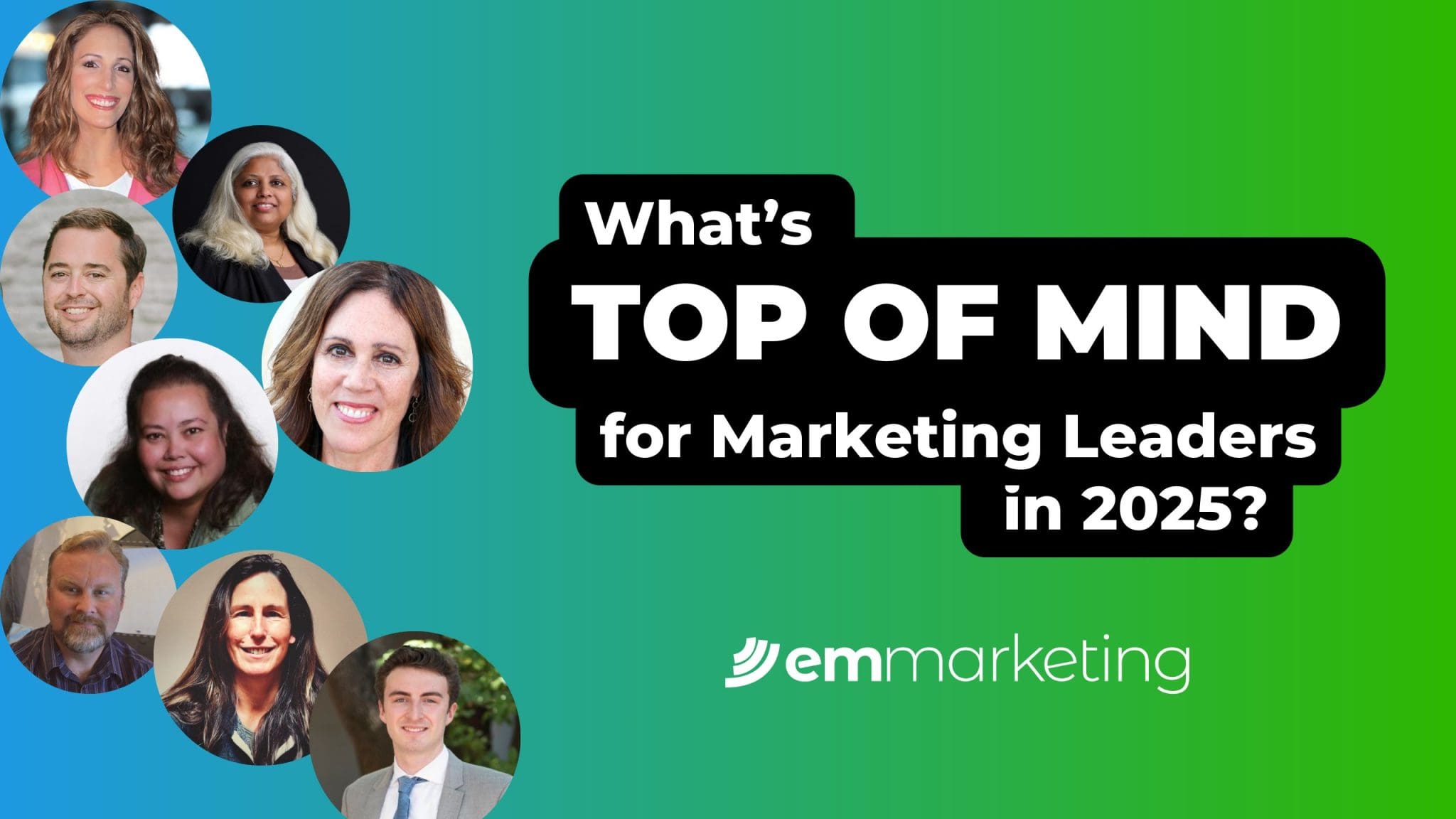
What’s Top of Mind for Marketing Leaders in 2025?
-
| Katherine Gustafson
7 Tips for Using Consultants Strategically When Budgets Are Snug
-
| Katherine Gustafson
My First Layoff: Tales of Disappointment — And Relief
-
| Katherine Gustafson
How to Lay People off Compassionately
-
| Ken Chen
When In-Between: Practical Ways to Re-Engage
-
| Katherine Gustafson
How 5 Marketing Leaders Are Steering Their Teams in Turbulent Times
-
| Katherine Gustafson
UC Berkeley’s Dr. Sahar Yousef Tells Us How to Avoid Burnout
-
| Katherine Gustafson
Third Thursday Talks | Molly St. Louis, “3 Types of Content: Earned, Owned, and Branded”
-
| Katherine Gustafson
What does inflation mean for consulting wages?
-
| Mackenzie Hamilton
Third Thursday Talks | Kristen Matthews on Influencer Marketing
-
| Mackenzie Hamilton
Third Thursday Talks | Adam Duran, “Humble, Hungry, and Smart”
-
| Katherine Gustafson
How to Understand, Prevent, and Recover From Burnout, a Webinar with Keshawn Hughes
-
| Katherine Gustafson
Want Job Security? Here’s Why You Should Consider Freelancing
-
| Heather Forsythe
A Blueprint for the Remote-First Workplace
-
-
-
-
-
| Ken Chen
A Pivot in the Employment World
-
-
-
| Jocelyn Rasekhi
3 Powerful Perks of Becoming a Contractor
-