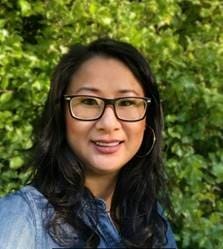
Savvy Storytelling: Meet Luchina Fisher


Luchina Fisher (she/her) is an Emmy-nominated director, writer, and filmmaker whose work is inspired by narratives at the intersection of race, gender, and identity. Her latest short film, The Dads, captures five disparate dads discussing their love, hopes, and fears for their trans kids, and is currently streaming on Netflix. Luchina has also worked with EM Marketing on a video storytelling project for a San Francisco Bay Area nonprofit organization.
What are some of your recent projects?
My most recent project is a film called The Dads, a short documentary about five dads of trans kids who take a weekend fishing trip with Dennis Shepard, the father of Matthew Shepard. It premiered at SXSW 2023. Soon after, the film was acquired by Netflix and NBA All-Star Dwayne Wade, who is also the proud father of a trans daughter, came aboard as an executive producer. And recently, the film was nominated for a Daytime Emmy Award!
Prior to that, I’ve made features including one that’s currently on the circuit called Locked Out, about the barriers to Black homeownership and the incredible brave women of Detroit who are fighting against modern day redlining and predatory lending. My first feature that I directed, called Mama Gloria, was about a trans elder named Gloria Allen. You can still catch it on PBS until the end of April. And my current project, also for PBS and supported by Black Public Media, is called Hiding in Plain Sight, a feature documentary about the unsung story of Black queer presence in music.
What inspired you to create these films?
I make the films I wanted to see growing up. I’m really interested in working at the intersection of race, gender, and identity – shaping narratives that we don’t see or hear all the time or twisting the narrative that we’re most familiar with. I love doing that as a way of expanding the way we tell our story as Americans, and also as humans.
Tell us about awards you’ve received for your work.
I’m delighted that GLAAD, an organization that supports truthful representations of LGBTQ people in the media, has recognized my work in a lot of ways. My first feature Mama Gloria was nominated for a GLAAD Media Award in 2022, and The Dads received a Special Recognition Award this year. The Dads was also just nominated for a Daytime Emmy Award for Outstanding Short Form Program. The broadcast will be June 7.
Team Dream has won awards at a number of festivals. It’s a short documentary about two inspiring women who became athletes in retirement. Nothing – not age, race, or geography – is going to stand in their way of competing in the National Senior Games. We received a Golden Thumb Award at Ebertfest, which was originally started by Roger Ebert, the great film critic.
Locked Out won the American Black Film Festival last year and it opened the Double Exposure Film Festival in Washington, D.C.
It’s nice that the work stands for itself and is resonating deeply with people. That’s the biggest award, really. I make films because I’m seeking greater understanding for myself, but I also want others to have a deeper understanding of the folks that they’re meeting through these films. While they take on serious topics, my films also contain a lot of joy. I believe you have to laugh, you have to smile, and you gotta spread love in this lifetime.
Describe your work with Aim High, a consulting project you did through EM Marketing.
Aim High was looking for a way of telling their story visually, and we put together two videos for them. With a visual medium, you are reaching people in a way that bypasses the brain and it goes right to the heart.
We worked with them during the pandemic, doing all of our filming virtually, with special equipment and cameras that we sent to them. Even with the technological challenges, what always comes through is the voice, the heart, the soul of the person. These are young people whose lives are changed by this summer educational program that really sees the whole person. I support their mission, and these are the kinds of stories I love to tell.
Have you done storytelling like this for other brands?
Tommy Hilfiger contacted me to work on a project because they had seen Mama Gloria. They had partnered with Harlem’s Fashion Row and felt it was important to have a Black woman storyteller to create a docuseries about three BIPOC designers who were competing for an opportunity to design a clothing collection for their brand. The episodes were featured on YouTube and one has over a million views. It was the brand’s first time attempting anything like that. When it came time to announce the winners on stage, they asked me to be a part of it to talk about my career and journey through the process.
I’ve also collaborated with another nonprofit, Human Rights Campaign, which helped fund The Dads. That project was a very personal one for me as somebody who serves with the Parents for Transgender Equality Council – I know a number of the dads in the film from this group. I overheard them having a conversation about taking a trip to the woods. I thought, what an interesting juxtaposition of these dads who love to do these stereotypical manly things, but they’re also advocating for LGBTQ youth. None of us knew it would end up on Netflix. That is just the power of storytelling. It’s great when a brand or a nonprofit sees the value in that.
How can brands use video to tell their stories?
It’s important to get another perspective. So, hire someone who has training and experience as a creative to tell the story. A documentary film is different from an advertisement. What we see today is a very sophisticated viewer. My children are growing up in a digital age and they’re very savvy – whether it’s in a Tik Tok video, an Instagram reel, or something they watch on Netflix, they know the difference between a documentary and a scripted project. They know when they’re being sold something.
If you want to introduce new ways to connect your brand story with your audience, documentary filmmaking is a great way to do that. Audiences can sense when there is an authenticity to the story versus some attempt to manipulate them. There’s a real craft and art to get to the truth of a story. You have to establish a space of trust, to let a person feel like their story will be treated with reverence and care.
Are you using AI in any of your work? If so, how?
One way I’m using it is through transcribing interviews. You can get a good baseline but you do have to go back and reconstruct it, because AI does not always know what that person is talking about, or can’t catch the nuance or intonation of people’s speech. Aside from that, there are new tools you can use to color-correct video.
You do have to be careful, especially in nonfiction and documentary storytelling, about any manipulation because that is breaking that trust with your audience that is expecting authenticity. Recently, there was controversy about using AI to reconstruct the voice of someone who was deceased and not telling the viewers. It came out later in the press. There was a recognition about AI during the writers’ and actors’ strikes, and it’s going to continue to play a role in visual storytelling.
What lessons have you learned about marketing your own work?
As an independent filmmaker, you’re always marketing yourself. I have a website and social media, whether it’s my personal profile, my production company, or individual films. Now that I have more of a reputation, I don’t have to constantly promote, but it is true that if you’re not visible, people tend to forget that you’re there.
At Sundance this year, I was catching up with friends and running into people whose names I know and who knew me. We were meeting for the first time in person – that still is the best way for people to remember you.
Netflix has a huge, supportive marketing machine, and The Dads had an Oscar campaign and got great press and into a lot of festivals.
But one really important aspect for me is giving back. There were others in the industry who were more established, who became my mentors and helped me in some way. I want to pay that forward to the next generation. So I teach an intro to documentary filmmaking class at Yale University. I love working with students and especially those who’ve never made a documentary before. I do a lot of mentoring and participate in the Saul Zaentz Story Lab for emerging filmmakers. They help keep me in the know and I impart a bit of wisdom.
And I feel grateful to have my agent Amanda Lebow at CAA who took me on last year. It’s a little bit of this, a little bit of that. I have so many ideas and projects in development. The beautiful thing about being creative is that there really is no limit.

Related
-

-
-
-
-
-
-
| Leilani Yau
Navigating Today’s Job Search with AI
-
| Charlie Mock
Reigniting Growth in 2026
-
| Oona Linde
EM Campfire Conversations: Marketing Trends for 2026
-
| Ken Chen
EM Marketing Announces New CEO: Charlie Mock
-
-
| Mackenzie Hamilton
Zero to Launch: Building a Brand in 17 Days with Generative AI
-
-
-
| Leilani Yau
Facilitating with Flair: Meet Katie Morell
-
-
| Leilani Yau
How to Build AI into Your Marketing Workflows
-
-
-
-
| Leilani Yau
Championing Cultural Equity: Meet Leslie Fisher
-
-
-
| Leilani Yau
Blending Strategy and Creativity: Meet Todd Nelson
-
| Kevin Cranfill
The Key to Raising Your Brand Storytelling Game
-
| Leilani Yau
Going and Growing Global: Meet Stephanie Peterson
-
| Monica Ortiz
Give Fall Event Planning the Grace of Time
-
-
| Leilani Yau
Content with Consulting: Meet Moira Alexander
-
| Leilani Yau
Business Development for Consultants
-
| Leilani Yau
Living the Lifecycle: Meet Carole Strickland
-
| Leilani Yau
Primed for Amazon Marketing: Meet Yvonne Schmidt
-
| Katherine Gustafson
Demystifying Account-Based Marketing: What It Is and What It Means for You
-
| Katherine Gustafson
How Marketing Teams Survive and Thrive in 2023 [Webinar]
-
| Leilani Yau
Trending on Social Media: Meet Ali Čargonja
-
-
| Katherine Gustafson
Mitch Larson Talks Consulting, Marketing, and Client Relationships
-
| Leilani Yau
New Year, New Manager? Tips to Handle What’s Next
-
| Katherine Gustafson
Ty Wang Talks Sustainability and Trying New Things
-
| Katherine Gustafson
My First Layoff: Tales of Disappointment — And Relief
-
| Leilani Yau
Journalist Turned Product Marketer: Meet Andrew Albert
-
| Katherine Gustafson
Damon Sununtnasuk Talks Work-From-Anywhere and Marketing in the Crypto Space
-
| Leilani Yau
Putting People First: Meet Jackie Tran
-
| Katherine Gustafson
How 5 Marketing Leaders Are Steering Their Teams in Turbulent Times
-
| Leilani Yau
The Write Stuff: Meet Ken Grobe
-
| Katherine Gustafson
UC Berkeley’s Dr. Sahar Yousef Tells Us How to Avoid Burnout
-
| Katherine Gustafson
Third Thursday Talks | Molly St. Louis, “3 Types of Content: Earned, Owned, and Branded”
-
-
| Leilani Yau
Living an Eventful Life: Meet Monica Ortiz
-
| Leilani Yau
Focused and Fearless: Meet Liz Tobiason
-
| Mackenzie Hamilton
Third Thursday Talks | Kristen Matthews on Influencer Marketing
-
-
| Mackenzie Hamilton
Third Thursday Talks | Adam Duran, “Humble, Hungry, and Smart”
-
| Katherine Gustafson
How to Understand, Prevent, and Recover From Burnout, a Webinar with Keshawn Hughes
-
| Leilani Yau
Mover and Shaker: Meet Amelia Clay
-
| Leilani Yau
Link to Success: Meet Alex Cwalinski
-
| Leilani Yau
Marketing + Brain Power: Meet Keshawn Hughes
-
| Leilani Yau
Developing Deep Connections: Meet Sandeepa Nayak
-
| Leilani Yau
Diligent Digital Marketer: Meet Mollison Daniel
-
| Leilani Yau
Flexing A Marketing Lifestyle: Meet Laura Wilton
-
| Leilani Yau
True Marketing Maven: Meet Colleen Atherton
-
| Leilani Yau
Sold on Consulting: Meet Michael Macon
-
| Leilani Yau
Marketing and Making Music: Meet Mike Boxer
-
-
| Leilani Yau
Marketing with Purpose and Passion: Meet Ileana Street
-
| Leilani Yau
Maximizing Marketing Impact: Meet Cathy Won
-
-
| Tricia McKinney
9 Project Management Best Practices for Creating Video Content
-
| Lynn Bruno
How to Make Video Content Production Sustainable
-
| Leilani Yau
Embracing Entrepreneurship: Meet Tricia McKinney
-
| Barrett Rudich
How to Bring More Value to Your Next Video Project
-
| Leilani Yau
A Vocation of Voice and Video: Meet Bud Anderson
-
| Leilani Yau
Charting a Course in Consulting: Meet Michelle Harden
-
| Leilani Yau
Digital Marketer On The Rise: Meet Chris Stone
-
-
-
| Jessica Smith
How to Sustain Your Energy to Avoid or Recover from Burnout
-
-
| Leilani Yau
Driving Positive Social Impact: Meet Kelly Saturno
-
| Leilani Yau
Launching Products and Chasing Storms: Meet Jim Conley
-
-
| Leilani Yau
Bringing Brands to Life: Meet Kristine Duffy
-
| Leilani Yau
Designing a Rewarding Life: Meet Kyle Courtright
-
| Leilani Yau
Doing the Deep Dive Into Data: Meet Sam Fintz
-
-
-
-
| Leilani Yau
Growth Marketing and Analytics Wiz: Meet Mitch Larson
-
| Leilani Yau
Finding a Rewarding Balance: Meet Gretchen Harding
-
| Lynn Bruno
Consultant Confidential: Saying No and I Don’t Know
-
| Lynn Bruno
Consultant Confidential: How to Market Yourself
-
| Leilani Yau
Making Her Way With Words: Meet Arianna Dogil
-
-
| Leilani Yau
Freelancer By Design: Meet Lindsey Obermeier
-
-
| Leilani Yau
Jessica Smith: Raising the Bar and Lifting People Up
-
| Leilani Yau
Ruben van Engelenburg: Tenacious, Driven Problem Solver
-
| Leilani Yau
Ursula Daly: Bring on the Marketing Challenge
-
| Justin Liszanckie
Client Project: Website Redesign for Wurl
-
| Leilani Yau
Corrina Reff: Designing at Peak Performance
-
| Leilani Yau
Jocelyn Rasekhi: Bringing Marketing to Vivid Life
-
| Leilani Yau
Daniel Gehant: Helping Clients Shine Online
-
| Leilani Yau
Colleen McCarthy: Driven to Serve Clients and Community
-
| Leilani Yau
Lori Reddy: Project Precision, People Person
-
-
| Leilani Yau
Swati Gohri: Design Is Her Way of Life
-
| Kevin Cranfill
Pam Franklin: Going the Distance for Small Business
-
| Leilani Yau
Next-Gen Consultants: Meet Alexis Keenan
-
| Justin Liszanckie
Client Project: Best of Boroughs Ad Campaign Design for Neustar
-
| Kevin Cranfill
Patrick Lundbom: SUP Enthusiast, Big Picture Digital Marketer
-
| Leilani Yau
Summer Vacation Contest Winners
-
| Leilani Yau
Next-Gen Consultants: Meet Sawdie Fernandez-Singh
-
-
| Karl Pontau
5 Ways You Can Use Motion Graphics
-
| Leilani Yau
Next-Gen Consultants: Meet Justin Liszanckie
-
-
| Leilani Yau
Next-Gen Consultants: Meet Lucy Frye
-
| Justin Liszanckie
Client Project: Website Redesign for SnapStrat
-
| Karl Pontau
Inbound Marketing: How Motion Graphics Improves your ROI
-
| Leilani Yau
Next-Gen Consultants: Meet Kendra Perry
-
| Justin Liszanckie
Client Project: Website Redesign for Precision Counts
-
-
| Leilani Yau
Community Day: A Chance to Meet, Mingle and Learn
-
| Justin Liszanckie
Client Project: Design Services for Intuit’s Firm of the Future
-
-
| Leilani Yau
Client Project: Illuminate Education Product Sheets
-
| Ken Chen
Community Matters
-
-
-
| Justin Liszanckie
Delightful Design Trends in 2017: Bold Minimalism
-
| Leilani Yau
EM Marketing Kicks Off 2017 Right
-
| Nicole Hanusek
Build Your Website in WordPress
-
| Justin Liszanckie
Meet Kevin Cranfill: A Curious, Collaborative Creative with Content to Burn
-
| Justin Liszanckie
Meet Lisa Ramirez: A Versatile Marketer Focused on Results
-
| Justin Liszanckie
Meet Nancy Keith Kelly: A Strategic, Self-Starting, Team-Building Adventurer
-
-
| Justin Liszanckie
Meet Rachel Plasse: An Indispensable, Integrated Marketing Professional
-
| Justin Liszanckie
Meet Ali Ward: An Accomplished, Results-Oriented Marketer
-
| Justin Liszanckie
Meet Karen Howard: A Strategic Thinker With a Can-Do Attitude
-
| Justin Liszanckie
Meet Jane Markell: An Immersive Marketer Who Gets Results
-
| Justin Liszanckie
Meet Jim Herbold: A Passionate (and Successful) Go-To-Market Leader
-
| Justin Liszanckie
Meet Tara Verner: A Proficient Problem Solver
-
| Jessaline Tuason
EM Marketing Goes to TEDxSF
-
| Justin Liszanckie
Meet Karen Paluska: A Big Picture Marketing Strategist Who Executes
-
| Justin Liszanckie
Meet Wens Gerdyman: A Conceptual Product Manager & Thinker
-
| Justin Liszanckie
Meet Jen Roop: An Investigative Problem Solver
-
| Justin Liszanckie
Meet Tricia McKinney: A Creative, Driven, & Outside-the-Box Thinker
-
| Justin Liszanckie
Meet Gretchen Harding: An Analytical & Curious Navigator
-
| Justin Liszanckie
EM Marketing Lunch & Learn: A Resonant Afternoon
-
| Justin Liszanckie
Meet Jennifer Stansbury: A Collaborative & Results-Driven Communicator
-
| Justin Liszanckie
EM Marketing New Year's Party – Hope Your 2015 Is off to a Good Start!
-
| Justin Liszanckie
Meet Audrey Tracy: A Jill-of-All Trades
-
| Justin Liszanckie
Meet Ruta Jaks: A Detail-Oriented & Diverse Skill Set
-
| Nicole Hanusek
Why You Should Use Responsive Web Design
-
| Ken Chen
What Makes a Landing Page Effective?
-
| Nicole Hanusek
The Best Websites: Functionality, Design, Usability
-
| Ken Chen
What Does EM Stand For?